

Continuously serving Kosciusko County since 1854
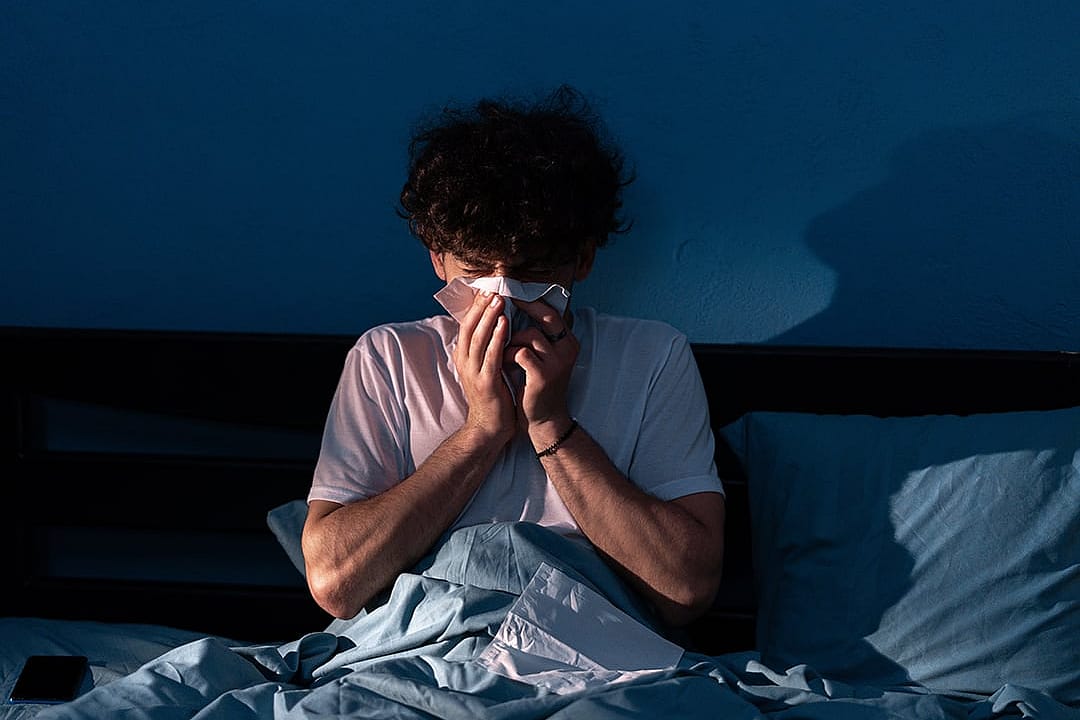

Are you struggling to sleep while fighting off a cold? A good night’s rest might be just what you need. But sleeping with a cold isn’t always easy. Between your cold symptoms and the urge to take unplanned naps, it can be challenging to get enough rest.
With some planning and preparation, though, you can set yourself up to get some shut-eye when you have a cold. Here are eight proven tips from GoodRx, a platform for medication savings, to help you sleep while you have a cold.
Sinus congestion and postnasal drip can make getting a good night’s sleep a real challenge. A lot of this has to do with the position of your head when you sleep. Being upright is really the best sleep position when you have a cough or cold. Here’s why.
When you’re upright, gravity helps draw mucus down and out of your sinuses through the sinus ostia (small drainage openings). These openings can become more congested when you lie down, making it harder for mucus to drain. As a result, mucus can collect in your sinuses. This can make congestion worse and increase pressure inside your sinuses. Not a good recipe for quality sleep.
Gravity also plays a major role in managing your cough. When you lie flat on your back, mucus from your nose runs down the back of your throat. This is known as postnasal drip. As the fluid hits your throat and vocal cords, it irritates them, triggering your cough reflex and keeping you up at night. By keeping your head elevated, you prevent that mucus from pooling where it bothers you most, reducing those late-night coughing fits.
You can make it easier for gravity to do its job by elevating your head and shoulders when you sleep. You can use several pillows to support your back and shoulders. A wedge pillow works especially well.
Sleeping on your side is another decent option, especially if you’re congested on one side of your nose. Again, use elevation to your advantage, and sleep with your congested side up. This will make it easier for mucus to drain from that side.
You can also try taking over-the-counter (OTC) medications to relieve your aches and pains, and improve your breathing while you try to sleep with a cold.
OTC medications for colds include:
Most of these OTC medications don’t start working right away. So plan to take them about 30 minutes before bed, though timing can vary depending on the medication.
Always follow the directions on a medication’s packaging, and talk with your primary care provider about whether any OTC options may not be suitable for you.
There are a few things you can do to help clear up your congestion and get better sleep. Here’s how to relieve congestion from a cold:
There are some alternative remedies that may help relieve symptoms that make it hard to sleep. Some natural options you can try include:
These options can provide soothing relief and relaxation in preparation for a restful night.
Have you heard the myth about “feeding a cold and starving a fever”? Whether you have a cold, fever, or other illness, it’s important to continue eating. But that can be tough, since you may lose your appetite when you have a cold. Do your best to prioritize nutrient-dense foods that can also help keep you hydrated.
Some of the best foods to eat when you have a cold include:
There are also foods and drinks that you’ll want to limit when you have a cold and want to get quality sleep. Do your best to avoid:
When you have a cold, it’s especially important to optimize your sleep environment for quality sleep. Here are some tips for creating ideal sleep conditions:
It’s tempting to stay in bed all day when you’re sick, and you certainly will need more rest than usual. But try to avoid napping within a few hours of bedtime, and rest somewhere outside your bedroom until it’s time to go to sleep.
Try doing a calming activity — like reading a book, journaling, or taking a hot shower — about an hour before bed to help you get sleepy.
Do as much of your usual bedtime routine as you feel physically able to do when you have a cold. Nightly routines are an essential part of sleep hygiene. They help your body establish healthy sleep-wake cycles, which may be disrupted by your cold symptoms.
Try to bathe, complete your skin care routine, and brush your teeth. Reinforcing these habits may help you drift off to sleep more easily when you have a cold.
There are a few key reasons you may have trouble sleeping when you’re sick, including:
Why do colds get worse at night?
Colds can get worse at night because when you’re lying down, gravity no longer helps drain your sinuses. This can worsen nasal congestion, sinus pressure, and headaches. Gravity also helps relieve postnasal drip. Lying down can also make postnasal drip get worse and trigger more frequent coughing.
Do colds make you tired?
Yes, when your body is fighting a cold, your immune system is working hard. And that requires extra energy. Plus, if you have a fever, you may feel tired. But a cold can also disrupt your sleep, so you may be tired because you’re not getting enough sleep at night.
Can you oversleep when sick?
You can’t really sleep too much when you’re sick. Your body may need more sleep than usual. But once you start feeling better, you should get back to your normal sleep pattern. If you find you’re sleeping a lot more than usual, it may be a sign of another issue. See your primary care provider if you feel your fatigue is lingering longer than your illness.
If you’re having trouble sleeping with a cold, it could be because of your symptoms and an increased immune response. With the right strategies, you can get a restful night's sleep, even with a cold. Sleeping well with a cold requires managing your symptoms and practicing proper sleep hygiene.
This story was produced by GoodRx and reviewed and distributed by Stacker.


